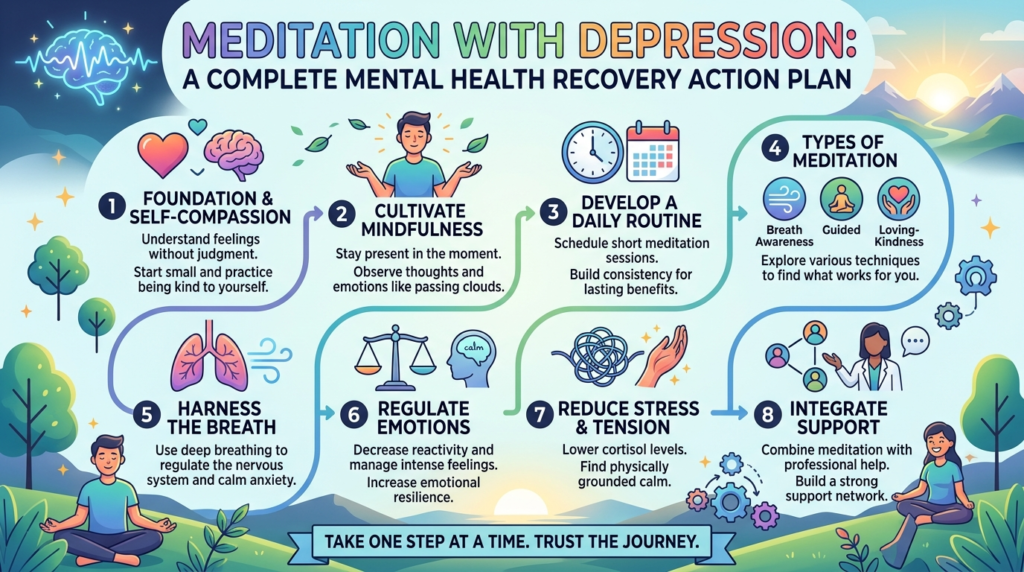
Meditation with Depression: It’s a deeply complex mental health condition that slowly affects your thoughts, emotions, energy levels, and even your ability to function in daily life. Many people describe it as feeling “stuck” in their own mind, where negative thoughts repeat endlessly and motivation disappears. In such situations, finding a sustainable and natural coping strategy becomes extremely important. This is where meditation plays a powerful role.
Meditation is not a magic cure, but when used consistently, it becomes a practical and effective recovery tool. It helps you reconnect with the present moment, reduce mental noise, and gradually build emotional resilience. In this blog, you’ll find a structured mental health recovery action plan using meditation, designed specifically for people dealing with depression and looking for long-term relief.
What Is Meditation and How Does It Help Depression?
Meditation is a mental training practice that teaches you how to observe your thoughts without getting overwhelmed by them. Instead of reacting to every negative thought, meditation helps you step back and see those thoughts as temporary experiences rather than absolute truths.
For individuals struggling with depression, this shift is life-changing. Depression often creates a loop of negative thinking—regret about the past, fear of the future, and a constant sense of hopelessness. Meditation interrupts this loop by grounding your awareness in the present moment.
Over time, regular meditation can help regulate emotions, reduce stress hormones, and improve overall mental clarity. It allows your mind to rest, something that is extremely difficult when you are dealing with persistent depressive thoughts.
Why You Need an Action Plan – Meditation with Depression
One of the biggest mistakes people make is trying meditation randomly without any structure. They sit once or twice, don’t feel immediate results, and then assume it doesn’t work. The truth is, meditation is like a muscle, it requires consistency and a clear plan to show results.
A well-designed action plan gives you direction and removes confusion. Instead of wondering what to do each day, you follow a simple routine that gradually builds your ability to focus and stay present. It also helps you track small improvements, which is extremely important when dealing with depression, where progress often feels invisible.
When you follow a structured approach, meditation becomes less overwhelming and more achievable, turning it into a daily habit rather than an occasional activity.
Step-by-Step Meditation Recovery Action Plan
Step 1: Start Small and Stay Consistent
When you’re dealing with depression, even simple tasks can feel exhausting. That’s why starting small is not just a suggestion it’s a necessity. Instead of forcing yourself into long sessions, begin with just 5 minutes of meditation each day.
The goal is not to achieve perfection but to build consistency. Even sitting quietly for a few minutes and focusing on your breath can create a positive shift in your mental state. Over time, these small efforts compound into meaningful progress.
Step 2: Create a Calm and Supportive Environment
Your environment has a direct impact on your mental state. A noisy or chaotic space can make meditation more difficult, especially when your mind is already overwhelmed.
Choose a quiet corner where you feel safe and comfortable. You don’t need anything fancy—just a clean, peaceful space where you can sit without distractions. Soft lighting, a comfortable posture, and minimal noise can significantly improve your experience.
Step 3: Focus on Breathing as Your Anchor
Breathing is one of the most effective tools in meditation because it is always available and naturally calming. When you focus on your breath, you give your mind a simple task, which helps reduce overthinking.
Try this technique: inhale slowly, hold briefly, and exhale gently. As you do this, pay attention to how your breath feels. When your mind wanders and it will gently bring your attention back to your breathing without judging yourself.
This process of “losing focus and returning” is actually the core of meditation, and it strengthens your mental control over time.
Step 4: Accept Thoughts Without Resistance
A common misconception is that meditation means having a completely empty mind. In reality, thoughts will continue to come, especially when you are dealing with depression.
The key is not to fight these thoughts but to observe them without attachment. When a negative thought appears, simply acknowledge it and let it pass. Think of it like watching clouds move across the sky you notice them, but you don’t hold onto them.
This practice reduces the emotional power of negative thoughts and helps you break free from constant overthinking.
Step 5: Use Guided Meditation for Support
If sitting in silence feels uncomfortable or overwhelming, guided meditation can be incredibly helpful. It provides structure and direction, making it easier to stay focused.
Guided sessions often include calming instructions, breathing exercises, and visualization techniques that help you relax more deeply. For beginners, this can make the entire process feel less intimidating and more engaging.
Day Meditation Action Plan for Depression
Starting a new habit becomes easier when you follow a simple plan. Here’s a beginner-friendly 7-day structure:
- Day 1–2: Focus only on breathing for 5 minutes.
- Day 3–4: Add body awareness and relaxation.
- Day 5: Try a guided meditation session.
- Day 6: Increase duration to 10 minutes.
- Day 7: Reflect on how you feel mentally and emotionally.
This gradual progression helps you build confidence and consistency without feeling overwhelmed.
Common Challenges in Meditation with Depression
“I can’t focus at all”
This is completely normal. Meditation is not about perfect focus—it’s about gently bringing your attention back whenever it drifts.
“I feel uncomfortable sitting alone”
Try guided meditation or play soft background sounds to create a sense of comfort.
“I don’t feel motivated”
Link meditation with an existing habit, such as doing it right after waking up or before sleeping.
“I’m not seeing results”
Meditation works gradually. Give it at least a few weeks of consistent practice before expecting noticeable changes.
How Meditation Helps Your Brain Heal
Meditation is not just a mental exercise it actually creates physical changes in the brain. It reduces activity in areas associated with stress and fear while strengthening regions responsible for focus and emotional regulation.
Over time, this helps you respond to situations more calmly instead of reacting impulsively. For someone dealing with depression, this shift can significantly improve daily functioning and emotional stability.
Long-Term Recovery Strategy
Meditation becomes truly effective when it’s part of a long-term lifestyle rather than a short-term experiment. As you continue practicing, you’ll notice subtle improvements—better focus, reduced stress, and a more balanced emotional state.
The key is patience. Healing from depression is not immediate, but with consistent effort, meditation can become a powerful support system in your recovery journey.
Conclusion
Meditation offers a simple yet deeply transformative way to manage depression. By following a structured action plan and staying consistent, you can gradually reduce negative thinking patterns and build emotional resilience.
Start small, stay patient, and allow yourself the space to heal. Even a few minutes of daily meditation can lead to meaningful, long-term change.
FAQs
Q1: Can Meditation Really Help With Depression?
Yes, meditation helps reduce stress, improve emotional control, and break negative thought patterns.
Q2: How Often Should I Meditate?
Daily practice is recommended, even if it’s just 5–10 minutes.
Q3: Is meditation Enough To Treat Depression?
It helps significantly but should be combined with professional support if needed.