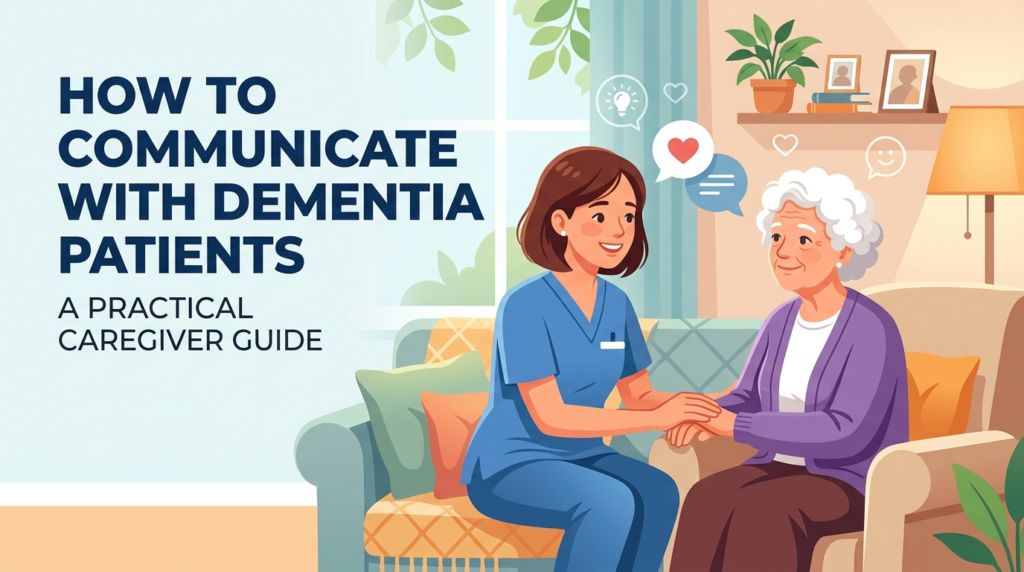
How to Communicate with Dementia Patients: Communication is one of the most challenging aspects of dementia care. As the condition progresses, individuals may struggle to find words, understand conversations, or express their needs clearly. This often leads to frustration, confusion, and emotional distress for both the patient and the caregiver.
However, effective communication is still possible. With the right techniques, caregivers can create meaningful connections, reduce anxiety, and improve daily interactions. From a therapist’s perspective, communication is not just about words, it’s about tone, patience, body language, and emotional understanding.
In this guide, you’ll learn practical, therapist approved communication strategies for dementia patients, designed to improve clarity, reduce stress, and strengthen relationships.
Why Communication Becomes Difficult in Dementia
Dementia affects the brain’s ability to process language, memory, and understanding. As a result, individuals may:
- Forget words or repeat themselves
- Struggle to follow conversations
- Misinterpret information
- Lose the ability to express thoughts
These changes are not intentional—they are part of the condition. Understanding this helps caregivers respond with patience rather than frustration.
Core Principles of Dementia Communication
1. Keep It Simple and Clear
Complex sentences can confuse individuals with dementia. Use short, simple, and direct language.
Example:
❌ “Can you please go into the kitchen and bring me the blue cup from the shelf?”
✅ “Please bring the blue cup.”
Clarity reduces confusion and improves understanding.
2. Speak Slowly and Calmly
Tone and pace matter. Speaking too quickly can overwhelm the person.
- Use a calm and gentle voice
- Pause between sentences
- Allow time for responses
Patience is key to effective communication.
3. Use Non-Verbal Communication
Body language plays a major role in communication, especially in later stages.
Techniques:
- Maintain eye contact
- Smile and use reassuring expressions
- Use gentle touch when appropriate
Non-verbal cues often communicate more than words.
4. Avoid Arguing or Correcting
Correcting someone with dementia can increase frustration and confusion.
Instead:
- Acknowledge their feelings
- Redirect the conversation
- Stay supportive rather than confrontational
Example:
Instead of saying, “That’s wrong,” say, “I understand how you feel.”
5. Ask One Question at a Time
Multiple questions can be overwhelming. Keep communication simple and focused.
Example:
❌ “Do you want tea or coffee, and should I bring it now or later?”
✅ “Do you want tea?”
This makes it easier for the person to respond.
6. Be Patient with Responses
Individuals with dementia may take longer to process information. Give them time to respond without rushing or interrupting.
Silence is okay—allow space for understanding.
7. Use Familiar Words and Topics
Talking about familiar subjects can make communication easier and more comfortable.
- Discuss past memories
- Use names they recognize
- Avoid complex or new topics
Familiarity reduces confusion.
8. Redirect Instead of Forcing
If the person becomes confused or upset, redirect their attention instead of forcing the conversation.
Example:
If they insist on something incorrect, gently change the topic or engage them in an activity.
Communication Strategies by Dementia Stage
Early Stage
- Encourage open conversations
- Be supportive and understanding
- Allow independence in communication
Early Signs of Dementia
Middle Stage
- Simplify language
- Use repetition when needed
- Focus on reassurance
Late Stage
- Rely more on non-verbal communication
- Use tone and touch to convey comfort
- Keep interactions calm and simple
Common Communication Mistakes
Speaking Too Fast
Leads to confusion and misunderstanding.
Using Complex Instructions
Overwhelms the individual.
Showing Frustration
Negative emotions can increase anxiety.
Ignoring Emotional Needs
Communication is not just about words—it’s about feelings.
Practical Daily Communication Tips
- Use the person’s name frequently
- Maintain a calm environment
- Limit background noise
- Use visual cues when possible
- Repeat information gently if needed
Consistency improves communication over time.
How to Handle Difficult Conversations
Difficult situations may arise when the person becomes upset, confused, or resistant.
Therapist Approach:
- Stay calm and composed
- Validate their emotions
- Avoid confrontation
- Redirect attention
Example:
If they say, “I want to go home,” instead of correcting them, respond:
“I understand. Tell me about your home.”
This approach reduces emotional distress.
Emotional Connection Matters Most
Even when verbal communication declines, emotional connection remains strong. Tone, facial expressions, and physical presence can provide comfort and reassurance.
From a therapist’s perspective, maintaining emotional connection is more important than correcting facts.
- Early Signs of Dementia
- Stages of Dementia
- How to Care for Dementia Patients
- Daily Routine for Dementia Patients
- Caregiver Burnout
Conclusion
Communicating with dementia patients requires patience, understanding, and adaptability. While the condition affects language and memory, meaningful communication is still possible through simple words, calm tone, and emotional connection.
By using therapist-approved strategies such as simplifying language, using non-verbal cues, and avoiding confrontation, caregivers can create a more supportive and positive environment.
Effective communication is not about perfection—it’s about connection, empathy, and consistency.
FAQs
Q1: What is the best way to communicate with dementia patients?
Use simple language, speak calmly, and rely on non-verbal communication.
Q2: Why do dementia patients struggle to communicate?
Because dementia affects memory, language processing, and understanding.
Q3: Should you correct dementia patients?
No, avoid correcting harshly. Focus on reassurance and redirection.
Q4: How do you calm a confused dementia patient?
Use a calm tone, validate their feelings, and reduce distractions.
Q5: What should you avoid when talking to dementia patients?
Avoid arguing, complex sentences, and showing frustration.