Dementia is a progressive condition, meaning its symptoms gradually worsen over time. For individuals and caregivers, understanding how dementia develops is essential for providing the right care at the right stage. Each stage brings different challenges, from mild memory loss to significant cognitive and physical decline.
Recognizing these stages early allows for better planning, improved care strategies, and enhanced quality of life. From a therapist’s perspective, awareness of dementia progression helps individuals and families adapt emotionally, mentally, and practically.
In this guide, you will learn the stages of dementia, how symptoms evolve, and practical care tips for each phase.
What Are the Stages of Dementia?
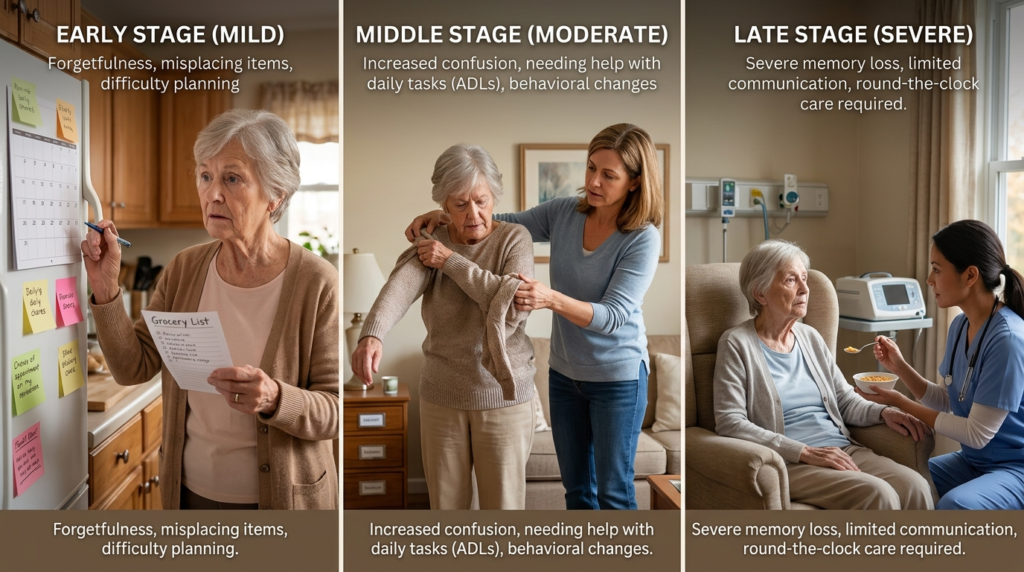
Dementia is commonly divided into three main stages:
- Early Stage (Mild Dementia).
- Middle Stage (Moderate Dementia).
- Late Stage (Severe Dementia).
Each stage reflects the level of cognitive decline and the type of support required.
Stage 1: Early Dementia (Mild Stage)
Key Symptoms
In the early stage, symptoms are often subtle and may be mistaken for normal aging. However, these signs gradually become more noticeable.
Common symptoms include:
- Mild memory loss (especially recent events)
- Difficulty finding words
- Trouble planning or organizing tasks
- Misplacing items
- Slight confusion with time or place
Individuals at this stage are usually still independent but may require occasional support.
Therapist Insight
From a therapeutic perspective, this is the most important stage for early intervention. Individuals are still aware of their condition, which can lead to anxiety or frustration. Emotional support is crucial during this phase.
Care Tips for Early Stage
- Encourage independence while offering support.
- Use reminders, notes, and calendars.
- Maintain a consistent daily routine.
- Promote mental stimulation (reading, puzzles).
- Encourage open communication about feelings.
Daily Routine for Dementia Patients
Stage 2: Middle Dementia (Moderate Stage)
Key Symptoms
This stage is usually the longest and most challenging for caregivers. Symptoms become more pronounced and start affecting daily functioning.
Common symptoms include:
- Increased memory loss and confusion
- Difficulty recognizing familiar people
- Problems with communication
- Behavioral changes (agitation, mood swings)
- Difficulty performing daily tasks
At this stage, individuals need more structured care and supervision.
Therapist Insight
Behavioral and emotional changes are common in this stage. Individuals may feel confused, frustrated, or even fearful. Caregivers must approach them with patience, empathy, and understanding.
Care Tips for Middle Stage
- Simplify communication (short, clear sentences)
- Maintain a structured routine
- Reduce environmental distractions
- Provide reassurance and emotional support
- Monitor safety (especially at home)
How to Communicate with Dementia Patients
Stage 3: Late Dementia
Key Symptoms
In the late stage, cognitive decline becomes severe, and individuals require full-time care.
Common symptoms include:
- Severe memory loss
- Inability to recognize loved ones
- Difficulty speaking or communicating
- Loss of physical abilities (walking, eating)
- Increased vulnerability to infections
Therapist Insight
At this stage, care becomes more physical than cognitive. Emotional connection, even through simple gestures like touch or tone of voice, remains important.
Care Tips for Late Stage
- Provide full-time care and supervision
- Focus on comfort and dignity
- Use non-verbal communication (touch, eye contact)
- Ensure proper nutrition and hydration
- Create a calm and safe environment
How Dementia Progresses Over Time
The progression of dementia varies from person to person. Some individuals may move slowly through stages, while others experience faster decline.
Factors affecting progression include:
- Type of dementia
- Overall health
- Lifestyle habits
- Early intervention
Understanding this progression helps caregivers prepare and adapt their care approach.
Emotional Impact on Patients and Caregivers
Dementia affects not only the individual but also their caregivers and family members.
For Patients:
- Fear and confusion
- Loss of independence
- Emotional distress
For Caregivers:
- Stress and burnout
- Emotional exhaustion
- Physical fatigue
Cluster Link: Caregiver Burnout in Dementia
How to Slow Dementia Progression
While dementia cannot always be reversed, certain strategies can help slow its progression:
- Engage in mental stimulation
- Maintain physical activity
- Follow a healthy diet
- Stay socially active
- Manage stress and sleep
Importance of a Structured Care Plan
A structured care plan becomes more important as dementia progresses. It helps:
- Reduce confusion
- Improve daily functioning
- Provide consistency
- Support caregivers
Daily routines, clear communication, and safe environments are key elements of effective care.
When to Seek Professional Help
Professional support becomes essential when:
- Symptoms worsen rapidly
- Behavior becomes difficult to manage
- Daily activities cannot be performed independently
Healthcare professionals, therapists, and support groups can provide guidance and assistance.
Cluster Internal Linking Strategy
This blog connects with:
- Early Signs of Dementia
- Daily Routine for Dementia Patients
- Communication Guide
- Caregiver Burnout
- Prevention
Conclusion
Understanding the stages of dementia is essential for effective care and long-term planning. Each stage presents unique challenges, but with the right knowledge and approach, individuals and caregivers can navigate the journey more confidently.
Early awareness, structured care, and emotional support play a vital role in improving quality of life. While dementia is a progressive condition, the way it is managed can make a significant difference.
FAQs
Q1: What are the 3 stages of dementia?
Early (mild), middle (moderate), and late (severe) stages.
Q2: How quickly does dementia progress?
Progression varies depending on the individual and type of dementia.
Q3: Which stage of dementia is the longest?
The middle stage is usually the longest and most challenging.
Q4: Can dementia progression be slowed?
Yes, through lifestyle changes, mental activity, and proper care.
Q5: When do dementia patients need full-time care?
Typically in the late stage when daily functioning is severely affected.