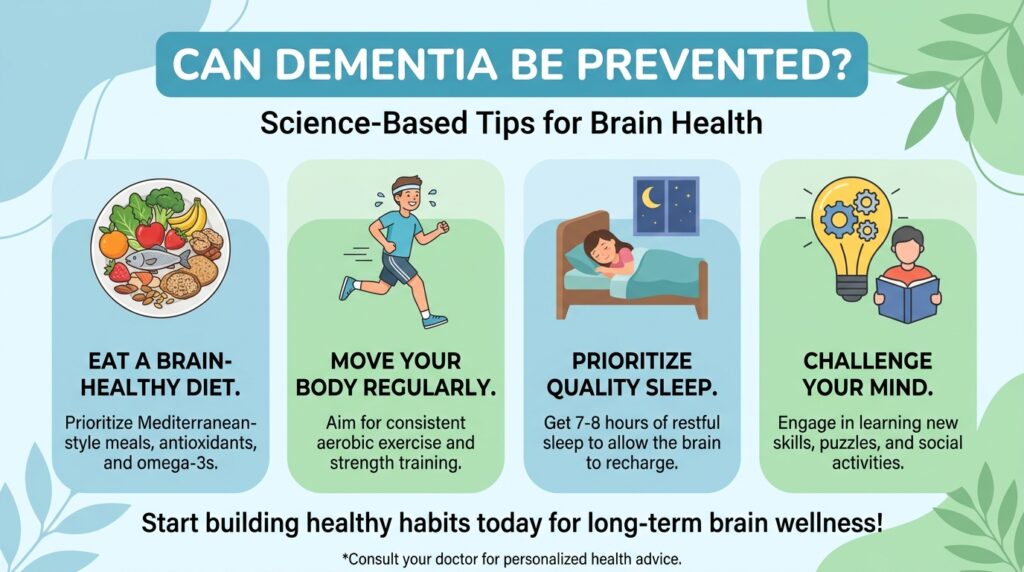
Dementia is one of the most concerning health conditions worldwide, especially as populations age. A common question people ask is: Can dementia be prevented? While there is no guaranteed way to completely prevent dementia, research shows that certain lifestyle choices can significantly reduce the risk and delay its onset.
From a therapist’s perspective, prevention is not about a single action—it’s about consistent daily habits that support long-term brain health. Small changes in lifestyle, when practiced regularly, can have a powerful impact on cognitive function.
In this guide, you’ll learn science-based strategies to reduce the risk of dementia, improve brain health, and maintain cognitive function as you age.
Can Dementia Be Prevented?
Dementia cannot always be completely prevented, especially when genetic factors are involved. However, studies suggest that up to 30–40% of dementia cases may be linked to modifiable risk factors.
This means that lifestyle changes can play a major role in reducing risk and slowing progression.
Key Risk Factors for Dementia
Understanding risk factors is the first step toward prevention.
Non-Modifiable Risk Factors:
- Age
- Genetics
- Family history
Modifiable Risk Factors:
- Poor diet
- Physical inactivity
- Smoking
- High blood pressure
- Diabetes
- Social isolation
- Chronic stress
Focusing on modifiable factors gives you control over your brain health.
Science-Based Ways to Reduce Dementia Risk
1. Stay Mentally Active
Keeping your brain engaged is one of the most effective ways to reduce cognitive decline.
Activities:
- Reading
- Puzzles and games
- Learning new skills
- Problem-solving tasks
Mental stimulation strengthens neural connections and improves memory.
2. Exercise Regularly
Physical activity increases blood flow to the brain and supports overall health.
Benefits:
- Reduces inflammation
- Improves mood
- Enhances memory
Even 20–30 minutes of daily activity, such as walking, can make a difference.
3. Follow a Brain-Healthy Diet
Nutrition plays a key role in cognitive health.
Recommended:
- Fruits and vegetables
- Whole grains
- Healthy fats
- Fish
Best Diet for Dementia Patients
4. Maintain Social Connections
Social interaction helps keep the brain active and reduces the risk of depression.
Examples:
- Spending time with family
- Joining community groups
- Engaging in conversations
Social engagement supports emotional and cognitive well-being.
5. Get Quality Sleep
Sleep is essential for brain repair and memory consolidation.
Tips:
- Maintain a regular sleep schedule
- Avoid screens before bedtime
- Create a calm sleep environment
Poor sleep is linked to increased risk of cognitive decline.
6. Manage Stress Effectively
Chronic stress can negatively impact brain function and memory.
Techniques:
- Meditation
- Deep breathing
- Relaxation exercises
Managing stress improves both mental and physical health.
7. Control Chronic Health Conditions
Conditions such as high blood pressure, diabetes, and heart disease increase dementia risk.
Action Steps:
- Regular medical checkups
- Proper medication management
- Healthy lifestyle choices
Managing these conditions protects brain health.
8. Avoid Harmful Habits
Certain lifestyle habits can accelerate cognitive decline.
Avoid:
- Smoking
- Excessive alcohol consumption
- Sedentary lifestyle
Reducing these habits lowers long-term risk.
Therapist Perspective on Prevention
From a therapist’s point of view, prevention is not just physical—it’s also emotional and behavioral.
- Maintaining routine reduces mental stress
- Emotional stability supports cognitive function
- Positive habits build long-term resilience
Prevention should be approached holistically.
Daily Brain Health Routine (Simple Plan)
Here’s a practical daily routine:
- Morning: Light exercise + healthy breakfast
- Midday: Social interaction + mental activity
- Evening: Relaxation + limited screen time
Daily Routine for Dementia Patients
Consistency is more important than intensity.
Early Warning Signs You Should Not Ignore
Even with prevention, it’s important to recognize early symptoms.
- Memory loss
- Confusion
- Difficulty concentrating
- Behavioral changes
Early Signs of Dementia
Early detection leads to better management.
Prevention vs Management
It’s important to understand the difference:
- Prevention: Reducing risk before symptoms appear
- Management: Controlling symptoms after diagnosis
Both are equally important for long-term brain health.
- Early Signs of Dementia
- Diet Blog
- Daily Routine
- Care Guide
- Activities Blog
Conclusion
While dementia cannot always be completely prevented, adopting healthy lifestyle habits can significantly reduce the risk and support long-term brain health.
By staying mentally active, maintaining physical health, following a balanced diet, and managing stress, individuals can take proactive steps toward protecting their cognitive function.
Prevention is not about perfection—it’s about consistency and awareness. Small daily actions can lead to meaningful long-term benefits.
FAQs
Q1: Can dementia be prevented completely?
No, but lifestyle changes can significantly reduce the risk.
Q2: What are the best ways to prevent dementia?
Exercise, healthy diet, mental activity, and social engagement.
Q3: At what age should I start prevention?
As early as possible, ideally in mid-life.
Q4: Does diet affect dementia risk?
Yes, a healthy diet supports brain function and reduces risk.
Q5: Can lifestyle changes reverse dementia?
They may slow progression but cannot fully reverse it.