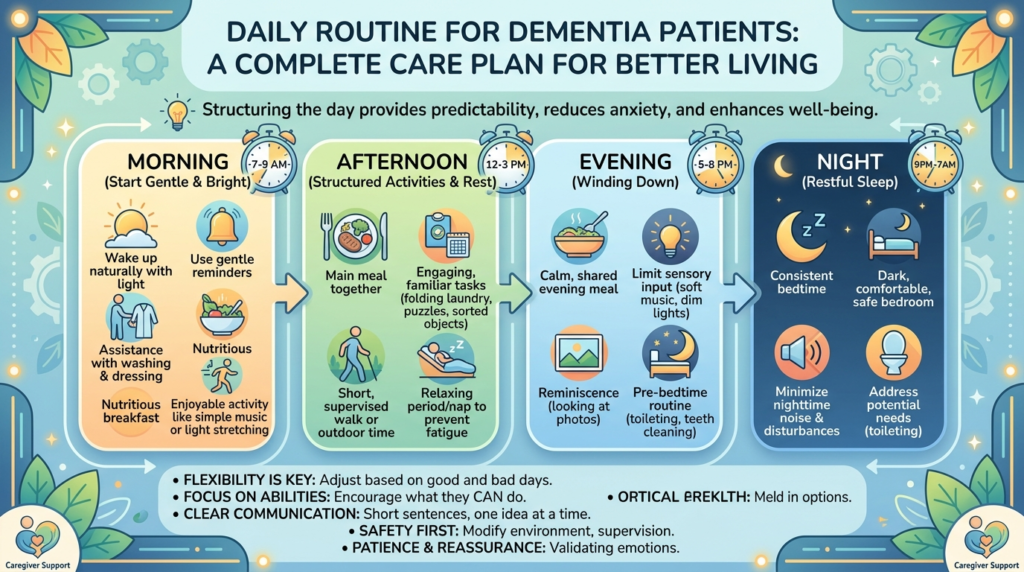
A daily routine for dementia patients is one of the most effective ways to reduce confusion, improve emotional stability, and support overall well-being. Dementia affects memory, thinking, and behavior, which often makes daily life unpredictable and overwhelming. Without structure, individuals may feel anxious, disoriented, or frustrated.
From a therapist’s perspective, creating a consistent daily routine for dementia patients provides a sense of familiarity and control. When activities happen at the same time each day, the brain begins to recognize patterns, which helps reduce stress and improve cooperation. A well-planned routine not only benefits the patient but also makes caregiving more manageable and less stressful.
In this guide, you will learn how to create a complete daily routine for dementia patients, including morning, afternoon, and evening plans, along with practical tips to improve quality of life.
Why a Daily Routine Is Important for Dementia Patients
A structured daily routine for dementia patients plays a critical role in managing symptoms and improving daily functioning. Dementia often causes confusion about time, place, and tasks, making it difficult for individuals to navigate their day independently. A predictable routine reduces uncertainty and provides a sense of stability.
When a daily routine for dementia patients is followed consistently, it helps in reducing anxiety, preventing agitation, and improving cooperation. It also supports better sleep patterns and enhances emotional well-being. Over time, routines become familiar, allowing individuals to participate more confidently in daily activities.
Stages of Dementia Explained
Morning Routine for Dementia Patients
Start the Day Calmly and Consistently
The morning sets the tone for the entire day, which is why a structured daily routine for dementia patients should begin with a calm and gentle start. Waking up at the same time each day helps regulate the body’s internal clock and reduces confusion.
Instead of rushing, caregivers should allow enough time for the patient to wake up naturally and adjust to their surroundings. A calm environment, soft lighting, and a reassuring tone can make mornings more comfortable and less stressful.
Personal Hygiene and Dressing
Personal care is an important part of any daily routine for dementia patients, but it can become challenging as the condition progresses. Breaking tasks into simple steps and offering guidance can make the process easier.
For example, instead of giving multiple instructions at once, guide the individual step by step. Encourage independence when possible, as this helps maintain dignity and confidence.
Healthy Breakfast and Hydration
Nutrition is a key component of a daily routine for dementia patients. A healthy breakfast provides energy, supports brain function, and sets a positive tone for the day. Meals should be simple, nutritious, and easy to eat.
Encouraging hydration in the morning is equally important, as dehydration can worsen confusion and cognitive symptoms.
Best Diet for Dementia Patients
Afternoon Routine for Dementia Patients
Engage in Meaningful Activities
The afternoon is an ideal time to include engaging activities in the daily routine for dementia patients. Activities help stimulate the brain, improve mood, and reduce boredom.
These activities should be simple and enjoyable, such as light exercise, puzzles, music, or creative tasks. The goal is to keep the individual mentally and physically active without causing stress.
Activities for Dementia Patients
Social Interaction and Communication
Social engagement is an important part of a daily routine for dementia patients, as it helps maintain emotional well-being and reduces feelings of isolation. Conversations with family members, friends, or caregivers can provide comfort and reassurance.
Communication should be simple, calm, and supportive. Using familiar topics and maintaining eye contact can make interactions more effective.
How to Communicate with Dementia Patients
Lunch and Rest Time
A balanced lunch followed by a short rest period is essential in a daily routine for dementia patients. Overexertion can lead to fatigue and increased confusion, so it’s important to balance activity with rest.
Providing a quiet and comfortable environment during rest time helps the individual relax and recharge for the rest of the day.
Evening Routine for Dementia Patients
Create a Calm and Relaxing Environment
Evenings can be challenging for dementia patients due to a phenomenon known as “sundowning,” where confusion and agitation increase later in the day. A structured daily routine for dementia patients should include calming activities to reduce stress during this time.
Soft lighting, reduced noise, and a peaceful environment can help create a sense of comfort and security.
Light Activities and Dinner
Evening activities should be simple and relaxing, such as listening to music, watching familiar shows, or spending quiet time with family. Dinner should be light, easy to digest, and served at a consistent time as part of the daily routine for dementia patients.
Maintaining consistency helps reduce confusion and supports better digestion and sleep.
Prepare for Sleep
A consistent bedtime routine is a crucial part of a daily routine for dementia patients. Going to bed at the same time each night helps regulate sleep patterns and improves overall well-being.
Avoid stimulating activities before bedtime and create a calm, comfortable sleeping environment. Good sleep is essential for brain health and emotional stability.
Therapist Tips for Building an Effective Routine
Creating a successful daily routine for dementia patients requires flexibility, patience, and understanding. From a therapist’s perspective, routines should be:
- Simple and easy to follow
- Consistent but adaptable
- Focused on comfort and familiarity
- Designed to reduce stress and confusion
Caregivers should observe how the individual responds to different activities and adjust the routine accordingly.
Common Mistakes to Avoid
Overloading the Schedule
A daily routine for dementia patients should not be too busy or overwhelming. Too many activities can lead to confusion and fatigue.
Ignoring Individual Preferences
Each person is unique, so routines should be personalized based on their interests and abilities.
Lack of Consistency
Inconsistency can increase confusion. Following the same routine daily is key to success.
- Early Signs of Dementia
- Stages of Dementia
- Care Guide
- Communication Guide
- Diet Blog
- Activities Blog
Conclusion
A well-structured daily routine for dementia patients is one of the most effective ways to improve quality of life, reduce stress, and support cognitive function. By creating a consistent schedule that includes proper nutrition, meaningful activities, and adequate rest, caregivers can provide a stable and supportive environment.
From a therapist’s perspective, the goal is not perfection but consistency and comfort. A simple, predictable routine can make a significant difference in both the patient’s and caregiver’s daily experience.
FAQs
Q1: What is the best daily routine for dementia patients?
A routine that includes consistent wake times, meals, activities, and sleep schedules.
Q2: Why is routine important for dementia patients?
It reduces confusion, improves stability, and enhances emotional well-being.
Q3: How do you create a routine for dementia patients?
Start with simple, consistent activities and adjust based on individual needs.
Q4: What activities should be included in a routine?
Light exercise, social interaction, and relaxing activities.
Q5: Can a routine reduce dementia symptoms?
Yes, it can help reduce anxiety, confusion, and behavioral issues.