Diet plays a crucial role in brain health, especially for individuals at risk of or living with dementia. While there is no single food that can cure dementia, research shows that certain dietary patterns can help slow cognitive decline, improve memory, and support overall brain function.
From a therapist’s perspective, nutrition is a key part of a holistic care plan. A well-balanced diet not only supports physical health but also enhances mood, energy levels, and mental clarity.
In this guide, you’ll learn the best diet for dementia patients, including brain-boosting foods, practical meal tips, and strategies to support long-term cognitive health.
How Diet Affects Brain Health
The brain requires a constant supply of nutrients to function properly. Poor nutrition can lead to inflammation, reduced blood flow, and oxidative stress—all of which are linked to cognitive decline.
A healthy diet helps:
- Protect brain cells
- Improve memory and concentration
- Reduce inflammation
- Support overall mental well-being
Can Dementia Be Prevented?
Best Diet Patterns for Dementia Prevention and Care
1. Mediterranean Diet
The Mediterranean diet is widely considered one of the best diets for brain health.
Key Features:
- High in fruits and vegetables
- Whole grains
- Healthy fats (olive oil)
- Fish and lean protein
This diet is linked to a lower risk of cognitive decline and improved memory.
2. DASH Diet
Originally designed for heart health, the DASH diet also benefits brain function.
Focus:
- Low sodium
- High intake of vegetables and whole foods
- Balanced nutrition
3. MIND Diet
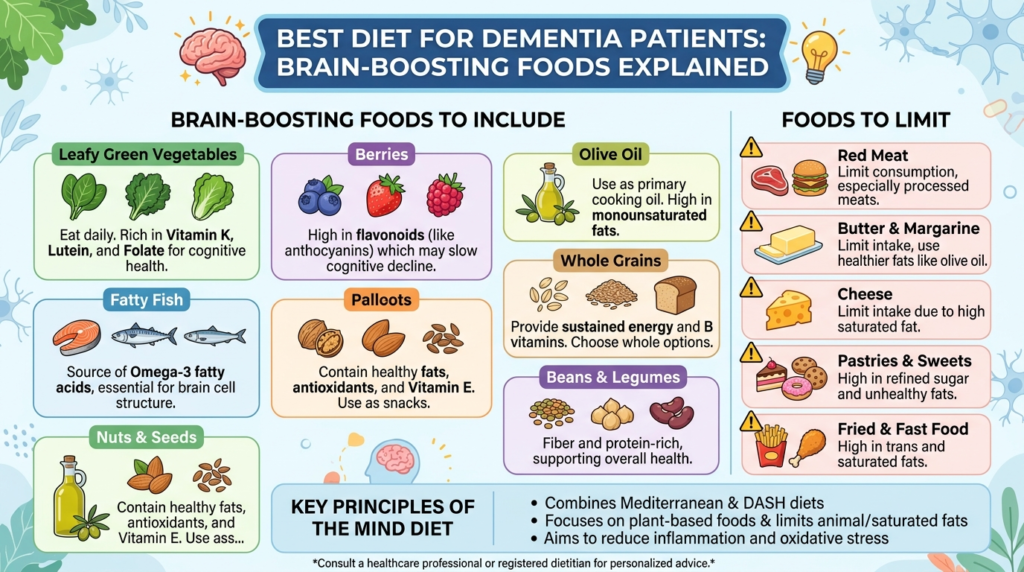
The MIND diet combines elements of the Mediterranean and DASH diets and is specifically designed for brain health.
Emphasis:
- Leafy greens
- Berries
- Nuts
- Whole grains
Research shows it can significantly reduce the risk of dementia.
Brain-Boosting Foods for Dementia Patients
1. Leafy Green Vegetables
Spinach, kale, and broccoli are rich in vitamins and antioxidants that protect brain cells.
2. Berries
Berries contain powerful antioxidants that improve memory and delay cognitive aging.
3. Fatty Fish
Fish like salmon and sardines are rich in omega-3 fatty acids, which support brain function.
4. Nuts and Seeds
Almonds, walnuts, and flaxseeds provide healthy fats and nutrients essential for brain health.
5. Whole Grains
Whole grains provide steady energy and support overall brain function.
6. Olive Oil
A key component of brain-healthy diets, olive oil reduces inflammation and supports cognitive health.
7. Eggs
Eggs are rich in choline, which supports memory and brain development.
Foods to Avoid
Certain foods can negatively impact brain health and should be limited:
- Processed foods
- Sugary snacks and drinks
- Excessive red meat
- Fried and fast foods
- Trans fats
These foods increase inflammation and may accelerate cognitive decline.
Practical Eating Tips for Dementia Patients
1. Keep Meals Simple
Complex meals can be overwhelming. Use simple, easy-to-eat options.
2. Maintain a Regular Meal Schedule
Routine helps reduce confusion and ensures proper nutrition.
Daily Routine for Dementia Patients
3. Encourage Hydration
Dehydration can worsen confusion and cognitive symptoms.
4. Use Finger Foods if Needed
In later stages, finger foods can make eating easier and more independent.
5. Create a Calm Eating Environment
Reduce distractions during meals to help focus.
Therapist Insights on Nutrition and Dementia
From a therapeutic perspective, diet is not just about nutrients—it’s also about routine, comfort, and familiarity.
- Familiar foods can reduce anxiety
- Eating routines provide structure
- Social meals improve emotional well-being
Nutrition should be approached with flexibility and care.
Can Diet Prevent Dementia?
While diet alone cannot guarantee prevention, it plays a significant role in reducing risk.
A healthy lifestyle that includes:
- Balanced nutrition
- Physical activity
- Mental stimulation
- Social engagement
can collectively support long-term brain health.
Early Signs of Dementia
Common Nutrition Challenges in Dementia
Loss of Appetite
Encourage small, frequent meals.
Difficulty Swallowing
Adjust food texture as needed.
Forgetting to Eat
Use reminders or supervised meals.
Preference Changes
Be flexible with food choices.
- Early Signs of Dementia
- Daily Routine
- Care Guide
- Prevention Blog
- Activities Blog
Conclusion
A healthy diet is one of the most effective ways to support brain health and manage dementia. While it cannot cure the condition, it can slow cognitive decline, improve quality of life, and support overall well-being.
By focusing on nutrient-rich foods, maintaining routine, and adapting meals to individual needs, caregivers can make a meaningful difference in the lives of dementia patients.
Small dietary changes, when practiced consistently, can lead to long-term benefits.
FAQs
Q1: What is the best diet for dementia patients?
The Mediterranean and MIND diets are considered the most effective.
Q2: Which foods improve brain health?
Leafy greens, berries, fish, nuts, and whole grains support brain function.
Q3: What foods should dementia patients avoid?
Processed foods, sugar, and unhealthy fats should be limited.
Q4: Can diet slow dementia progression?
Yes, a healthy diet can help slow cognitive decline.
Q5: How can caregivers improve eating habits?
By creating routine, offering simple meals, and ensuring hydration.