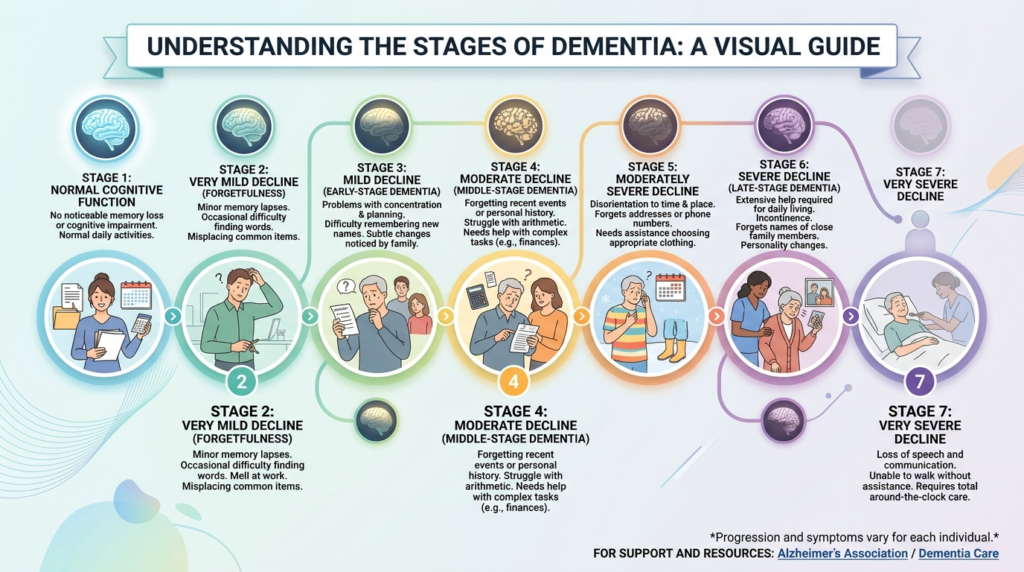
Dementia is a growing global health concern, affecting millions of individuals and families worldwide. It is not a single disease but a term used to describe a group of symptoms that impact memory, thinking, and daily functioning. One of the biggest challenges with dementia is that its early signs are often subtle and easily overlooked. In this guide, you will learn the early signs of dementia, how to identify them, and practical prevention strategies that support brain health.
Recognizing these early warning signs is crucial. Early detection allows individuals and caregivers to take proactive steps, seek professional support, and slow the progression through lifestyle changes and proper care. From a therapist’s perspective, understanding these early symptoms can make a significant difference in long-term mental and cognitive health.
What Is Dementia?
Dementia refers to a decline in cognitive function severe enough to interfere with daily life. It affects memory, reasoning, communication, and behavior. While aging increases the risk, dementia is not a normal part of aging.
There are different types of dementia, including Alzheimer’s disease, vascular dementia, and others. Each type has its own causes, but many early symptoms overlap, making awareness essential.
Early Signs of Dementia
1. Memory Loss That Disrupts Daily Life
One of the earliest and most common signs of dementia is memory loss, especially forgetting recently learned information. This may include forgetting important dates, repeating questions, or relying heavily on reminders.
Unlike normal forgetfulness, these memory lapses begin to interfere with daily activities and routines.
2. Difficulty Planning or Solving Problems
Individuals may struggle with tasks that require concentration, such as managing finances, following recipes, or organizing daily activities. They may take longer to complete tasks or make more mistakes than usual.
3. Confusion with Time or Place
People with early dementia may lose track of dates, seasons, or the passage of time. They might forget where they are or how they got there, even in familiar environments.
4. Trouble Understanding Visual Information
Vision problems can also be an early sign. This includes difficulty reading, judging distances, or recognizing objects and faces.
5. Language and Communication Problems
Another common sign is difficulty finding the right words during conversations. Individuals may pause frequently, repeat themselves, or struggle to follow or join discussions.
How to Communicate with Dementia Patients
6. Misplacing Items and Losing the Ability to Retrace Steps
Placing objects in unusual locations and being unable to find them is a key indicator. Over time, this may lead to suspicion or frustration.
7. Poor Judgment and Decision-Making
Changes in judgment may appear as poor financial decisions, neglect of personal hygiene, or difficulty assessing situations correctly.
8. Withdrawal from Social Activities
People may begin to withdraw from hobbies, work, or social interactions due to confusion, frustration, or lack of confidence.
9. Changes in Mood and Personality
Mood swings, increased anxiety, depression, or irritability are common in early dementia. Individuals may become easily upset or confused in unfamiliar situations.
Dementia vs Normal Aging
It is important to distinguish between normal aging and early dementia.
- Occasional forgetfulness = Normal
- Frequent memory loss affecting daily life = Warning sign
If symptoms become persistent and worsen over time, it may indicate dementia rather than normal aging.
Why Early Detection Matters
Early detection provides several important benefits:
- Access to early treatment and support
- Ability to plan future care
- Improved quality of life
- Slower progression through lifestyle changes
From a therapist’s perspective, early intervention allows individuals to develop coping strategies and maintain independence longer.
Therapist-Recommended Prevention Strategies
While dementia cannot always be prevented, certain habits can significantly reduce the risk.
1. Keep Your Brain Active
Engaging in mentally stimulating activities helps maintain cognitive function. Activities such as reading, puzzles, learning new skills, or playing memory games are highly beneficial.
2. Maintain Physical Activity
Regular exercise improves blood flow to the brain and supports overall health. Even simple activities like walking can have a positive impact.
3. Follow a Brain-Healthy Diet
A balanced diet rich in fruits, vegetables, whole grains, and healthy fats supports brain function.
Best Diet for Dementia Patients
4. Stay Socially Connected
Social interaction reduces the risk of cognitive decline. Staying connected with friends, family, or community groups helps maintain emotional and mental health.
5. Manage Stress and Mental Health
Chronic stress can negatively impact brain health. Practices such as mindfulness, meditation, and relaxation techniques can help reduce stress levels.
6. Get Quality Sleep
Sleep plays a crucial role in brain repair and memory consolidation. Poor sleep can increase the risk of cognitive decline.
7. Monitor Overall Health
Conditions such as high blood pressure, diabetes, and heart disease can increase the risk of dementia. Managing these conditions is essential for prevention.
When Should You Seek Professional Help?
If you notice persistent changes in memory, behavior, or thinking, it is important to consult a healthcare professional. Early evaluation can help determine the cause and provide appropriate guidance.
Do not ignore symptoms or assume they are part of normal aging. Early action leads to better outcomes.
Conclusion
Recognizing the early signs of dementia is one of the most important steps toward effective management and prevention. While the condition can be challenging, early awareness provides an opportunity to take control and make informed decisions.
By understanding the warning signs and adopting healthy lifestyle habits, individuals can support their cognitive health and improve their quality of life. From a therapist’s perspective, small daily actions combined with early intervention—can make a meaningful difference in long-term outcomes.
FAQs
Q1: What are the earliest signs of dementia?
Early signs include memory loss, confusion, difficulty with problem-solving, and changes in mood or behavior.
Q2: How is dementia different from normal aging?
Normal aging involves mild forgetfulness, while dementia causes memory loss that affects daily life and worsens over time.
Q3: Can dementia be prevented?
While not always preventable, a healthy lifestyle, mental activity, and proper care can reduce the risk.
Q4: When should I see a doctor for dementia symptoms?
If symptoms are persistent, worsening, or affecting daily life, seek professional help immediately.
Q5: What is The Best Way To Support Brain Health?
Regular exercise, a healthy diet, mental stimulation, and social interaction are key factors.