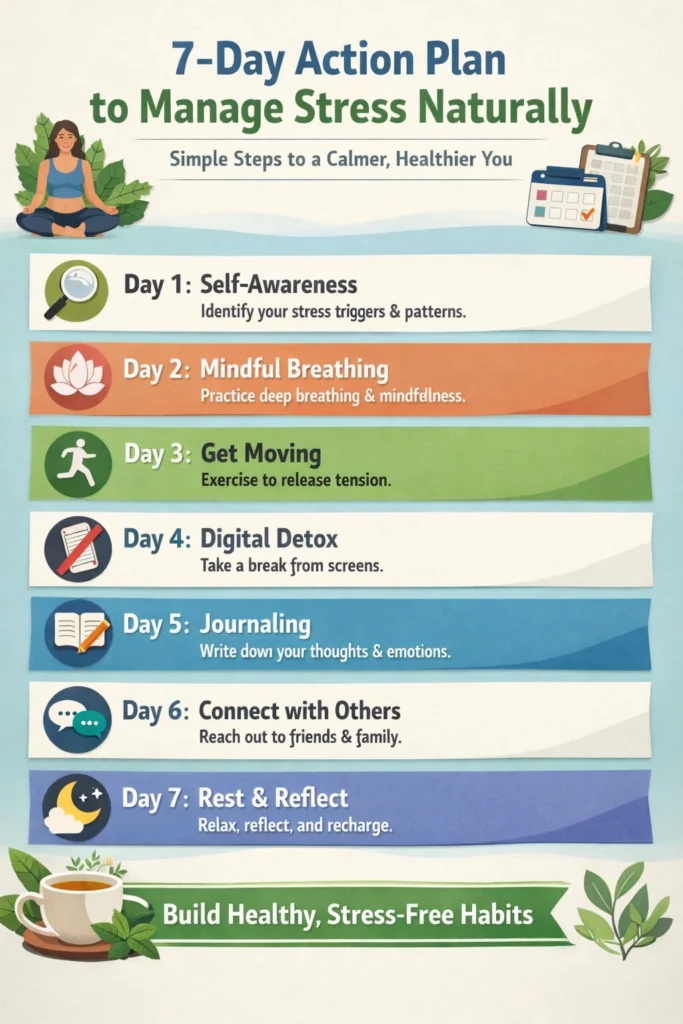
Stress has become a normal part of modern life, but when it becomes constant, it can negatively affect both your mental and physical health. Chronic stress can lead to anxiety, burnout, poor sleep, low energy, and difficulty concentrating. Many people try to ignore stress or push through it, but without proper management, it continues to build and eventually becomes overwhelming.
The good news is that stress can be managed naturally with simple, consistent habits. Instead of relying on temporary fixes, a structured plan can help you gradually reduce stress and improve your overall well-being. This guide provides a 7-day action plan to manage stress naturally, designed to help you reset your mind, build healthier habits, and regain emotional balance.
Why You Need a Structured Stress Management Plan
Stress often comes from feeling out of control. When your thoughts are scattered and your routine is unstructured, your mind becomes more reactive and overwhelmed. A structured plan helps create stability and gives your mind a clear path to follow.
A 7-day action plan works well because it is short enough to stay manageable but long enough to build momentum. Each day focuses on a specific habit that contributes to reducing stress, making the process simple and achievable.
Day 1: Awareness and Self-Assessment
The first step in managing stress is understanding it. Many people experience stress without fully recognizing what is causing it. Taking time to reflect allows you to identify patterns and triggers.
Start by asking yourself:
- What situations make me feel stressed?
- How does stress show up in my body?
- What thoughts do I experience during stressful moments?
Write your answers in a journal. This process increases self-awareness and helps you take control instead of reacting automatically. Awareness is the foundation of change.
Day 2: Breathing and Mindfulness Practice
Once you understand your stress triggers, the next step is learning how to calm your mind. Breathing exercises and mindfulness are simple yet powerful tools for reducing stress.
Practice slow, deep breathing for 5–10 minutes. Focus on your breath and bring your attention back whenever your mind wanders. This helps regulate your nervous system and reduces physical tension.
Mindfulness teaches you to stay present instead of worrying about the past or future. Even a few minutes of daily practice can significantly improve your emotional state read more.
Day 3: Physical Movement and Activity
Stress is not just mental it also affects your body. Physical activity helps release built-up tension and improves your mood.
Engage in light exercise such as walking, stretching, or yoga. You don’t need an intense workout; the goal is to move your body consistently.
Exercise increases endorphins, which are natural mood boosters. It also helps reduce stress hormones, making you feel more relaxed and energized.
Day 4: Digital Detox and Mental Clarity
Constant exposure to screens, social media, and notifications can increase stress and overwhelm your mind. Taking a break from digital distractions allows your brain to rest.
Set specific times during the day when you avoid your phone or limit screen usage. Use this time to engage in offline activities such as reading, journaling, or simply relaxing.
A digital detox helps reduce information overload and improves focus and mental clarity.
Day 5: Journaling and Emotional Release
Holding in your thoughts and emotions can increase stress. Journaling provides a safe space to express what you’re feeling without judgment.
Write freely about your day, your worries, or anything that is on your mind. You don’t need to follow a structure just let your thoughts flow.
This process helps clear mental clutter, reduce overthinking, and provide a sense of relief. Over time, journaling can also help you identify patterns and track your progress.
Day 6: Social Connection and Support
Humans are naturally social beings, and isolation can increase stress. Connecting with others provides emotional support and helps you feel understood.
Reach out to a friend, family member, or someone you trust. Even a simple conversation can improve your mood and reduce stress.
If you prefer, you can also join a support group or community where you can share your experiences. Knowing that you’re not alone can be incredibly comforting.
Day 7: Rest, Reflection, and Reset
The final day focuses on rest and reflection. Recovery is just as important as action. Without proper rest, your mind and body cannot fully recover from stress.
Take time to relax and reflect on your week. Ask yourself:
- What helped me feel better?
- What habits worked best?
- What can I continue moving forward?
Use this reflection to create a sustainable routine beyond the 7-day plan. This step ensures long-term improvement rather than temporary relief.
Key Habits to Continue After 7 Days
The goal of this plan is not just short-term stress relief but long-term change. Continue practicing the habits that worked best for you, such as:
- Daily breathing or meditation.
- Regular physical activity.
- Journaling.
- Limiting screen time.
- Maintaining social connections.
Consistency is what transforms these habits into lasting improvements.
Common Mistakes to Avoid
Trying to Do Everything Perfectly
Perfection is not required. Focus on progress and consistency instead of doing everything flawlessly.
Ignoring Your Emotions
Suppressing emotions can increase stress. Allow yourself to feel and process your emotions.
Giving Up Too Soon
Results take time. Stick to the plan even if you don’t see immediate changes.
Long-Term Benefits of Managing Stress Naturally
When you manage stress effectively, you’ll notice improvements in multiple areas of your life:
- Better emotional stability.
- Improved focus and productivity.
- Higher energy levels.
- Better sleep quality.
- Stronger relationships.
These benefits contribute to overall mental and physical well-being.
When to Seek Professional Help
While natural methods are effective, there are times when professional support is necessary. If your stress becomes overwhelming, persistent, or affects your daily functioning, consider speaking with a therapist or mental health professional.
Combining self-help strategies with professional guidance can provide the best results.
Conclusion
Managing stress naturally is possible with the right approach and consistency. This 7-day action plan provides a simple and effective way to reset your mind, build healthy habits, and improve your emotional well-being.
Remember, small daily actions lead to long-term change. You don’t need to eliminate stress completely just learn how to manage it in a healthy and sustainable way.
FAQs
Q1: How can I reduce stress naturally?
You can reduce stress through breathing exercises, physical activity, journaling, and mindfulness practices.
Q2: How long does it take to manage stress?
You may notice improvements within a few days, but long-term results require consistency.
Q3: Is a digital detox helpful for stress?
Yes, reducing screen time helps lower mental overload and improves focus.
Q4: Can stress affect physical health?
Yes, chronic stress can impact sleep, energy levels, and overall health.
Q5: When should I seek help for stress?
If stress becomes overwhelming or affects your daily life, professional support is recommended.