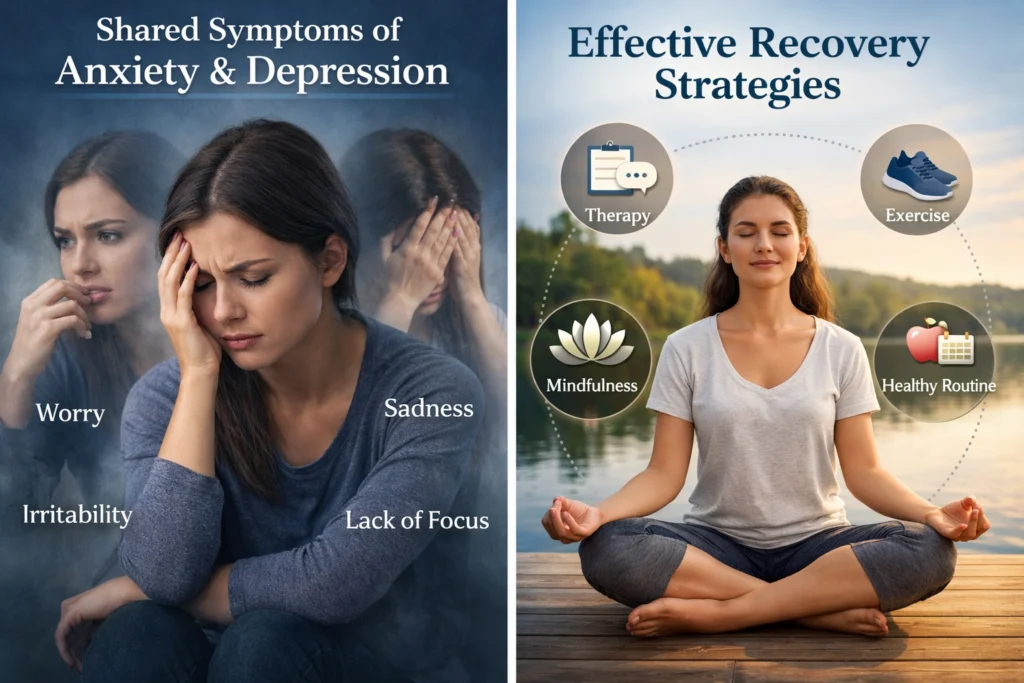
Many adults who begin researching their mental health notice something confusing: the symptoms of anxiety and depression often feel almost identical. Someone may experience persistent worry, exhaustion, sleep disruption, and low motivation all at once. This overlap leads many people to search for answers about depression and anxiety symptoms, trying to understand whether they are experiencing one condition, the other, or both.
Mental health research consistently shows that anxiety and depression frequently occur together. Major clinical institutions report high rates of comorbidity between the two conditions, meaning they often overlap rather than exist separately. Understanding shared symptoms is not about labeling yourself, it is about recognizing early warning signs and responding with appropriate care.
Why Anxiety and Depression Overlap
However, both conditions affect the brain’s stress-response system and mood-regulation pathways. Clinical observations and peer-reviewed research indicate that prolonged anxiety increases vulnerability to depressive symptoms. Continuous stress activation can reduce emotional resilience over time. This is why many individuals who initially experience anxiety may later notice signs commonly associated with depression. Understanding the connection helps prevent escalation. Early recognition improves long-term outcomes.
Emotional Symptoms Shared by Anxiety and Depression
One of the most common overlapping signs is persistent emotional discomfort. Individuals may feel constantly tense yet emotionally drained. Anxiety may produce excessive worry or irritability, while depression may bring sadness or numbness. When combined, a person may feel restless but simultaneously unmotivated.
Another shared emotional symptom is hopelessness. Anxiety can create fear that something negative will happen. Depression reinforces beliefs that improvement is unlikely. Together, these patterns increase emotional fatigue.
Heightened sensitivity is also common. Minor challenges may feel overwhelming, and emotional reactions may seem stronger than usual. This does not indicate weakness; it reflects stress overload within emotional regulation systems.
Cognitive Symptoms: Changes in Thinking Patterns
Shared cognitive symptoms are often subtle but significant. Difficulty concentrating is one of the most frequently reported experiences. Anxiety fills the mind with intrusive thoughts, while depression slows mental processing and reduces mental clarity. Both interfere with focus.
Negative thought patterns also overlap. Anxiety amplifies worst-case scenarios, while depression encourages self-critical thinking. Over time, these cognitive distortions reinforce each other.
Memory difficulties may develop when stress hormones remain elevated. Chronic mental strain affects working memory and decision-making abilities. Individuals may begin doubting their capabilities, further increasing emotional distress.
Physical Symptoms That Appear in Both Conditions
Many people first notice physical symptoms rather than emotional ones. Sleep disturbances are extremely common. Anxiety may cause difficulty falling asleep due to racing thoughts, while depression may cause excessive sleeping or persistent fatigue even after rest.
Chronic tiredness is another shared symptom. Anxiety keeps the body in a state of alertness, which consumes energy. Depression reduces motivation and physical drive. The combination results in exhaustion that feels both mental and physical.
Appetite changes frequently occur as well. Some individuals eat less under stress, while others seek comfort in food. Digestive discomfort, muscle tension, and headaches may also appear. According to reputable health institutions such as Mayo Clinic, physical manifestations are often part of both anxiety and depressive disorders.
Behavioral Changes in Daily Life
Procrastination often increases. Anxiety makes tasks feel overwhelming, and depression reduces energy to begin them. This cycle reinforces guilt and self-doubt.
Irritability and reduced patience may strain relationships. Loved ones may notice mood changes before the individual does.
When Symptoms Require Professional Evaluation
While mild overlapping symptoms are common during stressful life phases, persistent patterns lasting several weeks warrant attention. If symptoms interfere with work performance, relationships, sleep, or basic functioning, seeking professional guidance is recommended.
Warning signs that require urgent evaluation include persistent hopelessness, inability to complete daily tasks, or thoughts of self-harm. Immediate professional support should be prioritized in such situations.
Evidence-Based Recovery Strategies
Restoring Sleep Stability
Physical Activity and Brain Health
Structured Daily Routine
Cognitive Awareness
Professional Therapy
When Symptoms Require Professional Evaluation
In addition to structured strategies, small daily habits strengthen recovery over time. Spending time outdoors improves mood regulation through exposure to natural light. Journaling encourages emotional processing. Mindfulness practices increase awareness of thought patterns without judgment.
Limiting excessive news or social media exposure prevents cognitive overload. Balanced nutrition supports stable energy levels and mood regulation.
Social connection remains one of the most protective factors. Meaningful conversations reduce isolation and strengthen emotional resilience.
Long-Term Outlook
Experiencing overlapping depression and anxiety symptoms does not indicate permanent decline. With early recognition, appropriate lifestyle adjustments, and professional guidance when necessary, many individuals regain emotional balance.
Recovery is rarely immediate. Progress appears gradually improved focus, better sleep, increased motivation, or reduced irritability. These small improvements signal emotional stabilization.
Authoritative Perspective
Mental health professionals emphasize that anxiety and depression frequently coexist due to shared biological and psychological mechanisms. Research from leading medical institutions confirms that comorbidity is common, and treatment plans often address both conditions together rather than separately.
Understanding symptoms early reduces risk of escalation. Awareness empowers action.
Faq's
Yes. Many evidence-based therapies are designed to address both conditions simultaneously because they share overlapping mechanisms.
Yes. Physical manifestations such as muscle tension, headaches, digestive discomfort, and appetite changes are common in both conditions.
Duration varies depending on severity, lifestyle factors, and access to support. Early intervention typically improves outcomes.