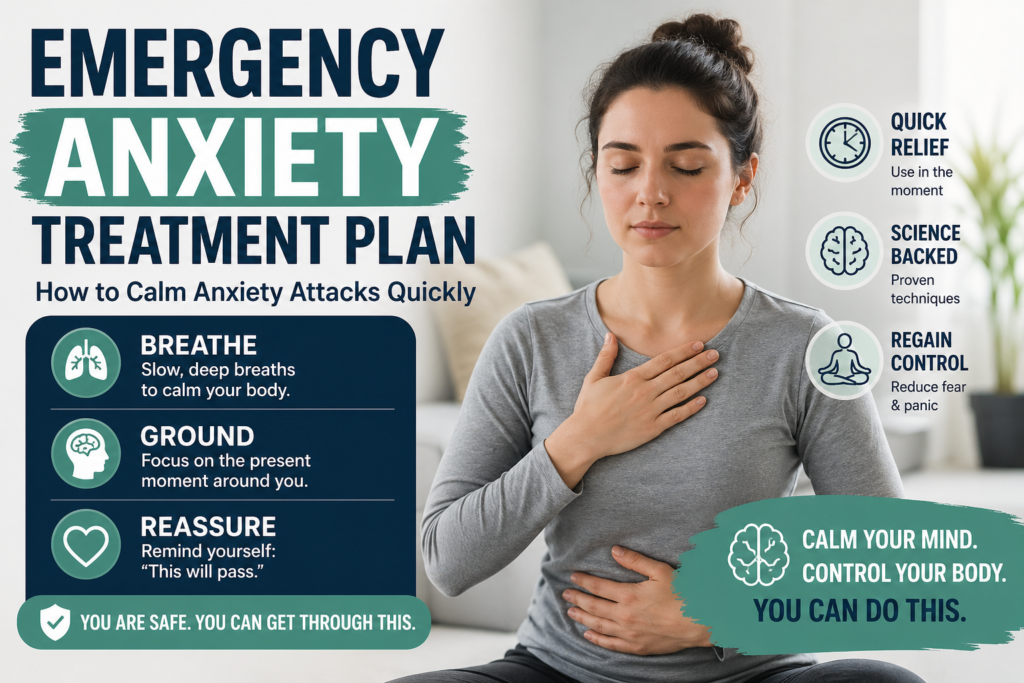
Anxiety attacks can feel sudden, intense, and overwhelming. In those moments, it often feels like you are losing control, even when there is no real danger present. The body reacts as if it is under threat, triggering symptoms such as a racing heart, shortness of breath, dizziness, and a sense of panic. This is why having a structured emergency anxiety treatment plan is essential—it gives you something reliable to follow when your mind feels chaotic.
From a clinical perspective, anxiety attacks are caused by an overactivation of the body’s stress response system. According to the American Psychological Association, panic responses are driven by the nervous system’s “fight or flight” mechanism, even when no actual threat exists. The goal of an effective emergency anxiety treatment plan is not to stop anxiety instantly, but to calm the body, reduce the intensity, and regain control step by step.
This guide provides a research-based approach that focuses on how your brain and body respond during an anxiety attack and what you can do immediately to reduce its impact.
What Happens During an Anxiety Attack
To apply an effective emergency anxiety treatment plan, it is important to understand what is happening inside your body. When anxiety spikes, your brain signals danger, which activates the autonomic nervous system. This leads to a surge of adrenaline, increased heart rate, rapid breathing, and heightened alertness.
Research from the National Institute of Mental Health explains that these symptoms are not harmful, even though they feel intense. The problem is not the symptoms themselves, but how we interpret them. When you believe something is wrong, your fear increases, which makes the symptoms worse. This creates a cycle where anxiety feeds itself.
A proper emergency anxiety treatment plan focuses on breaking this cycle by calming the body first, then addressing the thoughts.
Step 1: Regulate Your Breathing Immediately
One of the fastest ways to reduce anxiety is to control your breathing. During an anxiety attack, breathing becomes rapid and shallow, which lowers carbon dioxide levels in the body and increases dizziness and discomfort. Slowing your breath helps restore balance.
Clinical studies have shown that slow breathing techniques can significantly reduce anxiety symptoms by activating the parasympathetic nervous system—the part of the body responsible for relaxation.
Instead of forcing deep breaths, focus on slowing your exhale. A longer exhale signals safety to your brain and gradually reduces the panic response. Within a few minutes, your heart rate begins to stabilize, and your body starts to calm down.
Step 2: Ground Yourself in the Present Moment
Anxiety attacks often involve fear about what might happen, rather than what is actually happening. Grounding techniques help bring your attention back to the present, reducing the intensity of the experience.
A widely used method in therapy is sensory grounding, where you focus on your surroundings instead of your internal sensations. This shifts your brain away from panic and toward reality.
Research in cognitive therapy shows that grounding reduces the emotional intensity of anxiety by interrupting the fear loop. When your attention moves outward, your brain stops amplifying internal sensations.
A strong emergency anxiety treatment plan always includes grounding because it helps you reconnect with your environment and regain control.
Step 3: Change Your Interpretation of Symptoms
One of the most powerful but overlooked parts of an emergency anxiety treatment plan is how you interpret what is happening. Many people panic because they believe something is seriously wrong with their body. In reality, the symptoms are uncomfortable but not dangerous.
Cognitive research shows that reframing your thoughts can significantly reduce anxiety intensity. Instead of thinking, “I am losing control,” you can remind yourself, “This is anxiety, and it will pass.”
This shift in thinking reduces fear, which in turn reduces physical symptoms. The goal is not to eliminate the feeling instantly, but to stop adding more fear to it.
Step 4: Allow the Anxiety Instead of Fighting It
A common mistake during anxiety attacks is trying to force the feeling to stop. This resistance often makes the symptoms stronger. Paradoxically, allowing the anxiety to exist without fighting it can reduce its intensity.
This concept is supported by acceptance-based therapies, which show that resisting anxiety increases stress, while acceptance reduces it. When you stop struggling against the feeling, your body naturally begins to calm down.
An effective emergency anxiety treatment plan teaches you to observe the sensation rather than react to it. Over time, this reduces the fear associated with anxiety attacks.
Step 5: Use Physical Movement to Release Tension
Anxiety creates physical tension in the body, which can make symptoms feel worse. Gentle movement helps release this tension and signals to your brain that the threat has passed.
Research indicates that even light physical activity can reduce stress hormones and improve emotional regulation. Walking slowly, stretching, or simply changing your posture can help your body shift out of panic mode.
Movement is not about distraction—it is about helping your body complete the stress response cycle.
Quick Emergency Anxiety Reset
When anxiety hits suddenly, your emergency anxiety treatment plan should be simple and easy to follow. Complex strategies are difficult to apply in high-stress moments.
Focus on three steps:
- Slow your breathing
- Ground your attention
- Reassure yourself that you are safe
These steps work together to calm both your body and mind.
Why These Techniques Work
Each part of this emergency anxiety treatment plan is based on how the brain and nervous system function. Anxiety is not just psychological—it is physiological. This means you must address both the body and the mind.
Breathing regulates your nervous system, grounding shifts your focus, and cognitive reframing reduces fear. When combined, these techniques create a powerful response that interrupts the anxiety cycle.
Common Mistakes During Anxiety Attacks
Many people unintentionally make anxiety worse by reacting in ways that increase fear. Trying to escape immediately, overanalyzing symptoms, or constantly checking your body can amplify the experience.
Another common mistake is expecting instant relief. Anxiety naturally rises and falls like a wave. The goal of an emergency anxiety treatment plan is not to stop the wave instantly, but to ride it until it passes.
Conclusion
Anxiety attacks can feel overwhelming, but they are manageable when you understand what is happening and how to respond. A structured emergency anxiety treatment plan provides clear steps that help you regain control, reduce symptoms, and break the cycle of fear.
By focusing on breathing, grounding, and changing how you interpret your symptoms, you can significantly reduce the intensity of anxiety attacks. Over time, these techniques become automatic, allowing you to handle anxiety more confidently.
Complete natural plan for anxiety
FAQs
Q1: What is the fastest way to stop an anxiety attack?
The fastest way is to regulate your breathing and focus on slow, controlled exhales. This helps calm your nervous system and reduces physical symptoms within minutes.
Q2: Are anxiety attacks dangerous?
No, anxiety attacks are not physically dangerous, even though they feel intense. The symptoms are caused by your body’s stress response, not a life-threatening condition.
Q3: How long do anxiety attacks last?
Most anxiety attacks peak within a few minutes and gradually decrease. However, the duration can vary depending on how you respond to the symptoms.
Q4: Should I fight anxiety or accept it?
Acceptance is more effective than resistance. Fighting anxiety often increases its intensity, while allowing it to pass reduces its impact.
Q5: Can I prevent anxiety attacks completely?
While you may not prevent them entirely, you can reduce their frequency and intensity with proper management and techniques.