When people hear about memory loss or cognitive decline, they often use the terms dementia and Alzheimer’s interchangeably. However, understanding the difference between dementia and Alzheimer’s is essential for accurate diagnosis, proper care, and effective long-term management.
From a clinical and therapist’s perspective, the distinction between dementia vs Alzheimer’s is not just medical—it directly impacts how patients are treated and how caregivers approach daily care. While both conditions affect memory and thinking, they are not the same.
At Mind Clarity Journal (replace with your brand), we emphasize educating families and caregivers about the key differences between dementia and Alzheimer’s so they can make informed decisions and provide better support.
In this guide, you’ll learn the key differences between dementia vs Alzheimer’s, including causes, symptoms, progression, and care strategies.
What Is Dementia?
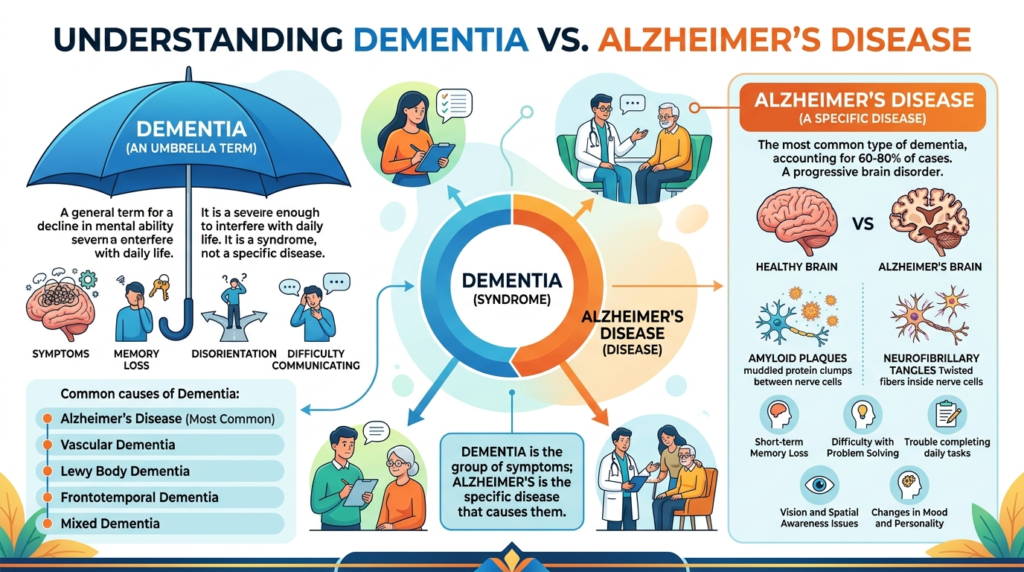
Dementia is not a single disease. It is a general term used to describe a group of symptoms that affect memory, thinking, behavior, and daily functioning. These symptoms are severe enough to interfere with everyday life.
The term dementia vs Alzheimer’s often creates confusion because dementia is actually an umbrella condition, while Alzheimer’s is a specific type of dementia.
There are several types of dementia, including:
- Alzheimer’s disease
- Vascular dementia
- Lewy body dementia
- Frontotemporal dementia
Each type has different causes but shares similar cognitive symptoms.
Early Signs of Dementia
What Is Alzheimer’s Disease?
Alzheimer’s disease is the most common cause of dementia, accounting for approximately 60–70% of cases. It is a progressive brain disorder that slowly destroys memory and thinking skills.
When discussing dementia vs Alzheimer’s, it is important to understand that Alzheimer’s is a specific disease with identifiable changes in the brain, such as the buildup of amyloid plaques and tau tangles.
Over time, Alzheimer’s affects the ability to carry out even simple tasks, making daily life increasingly difficult.
Dementia vs Alzheimer’s: Key Differences
1. Definition
The most important distinction in dementia vs Alzheimer’s is that dementia is a broad term, while Alzheimer’s is a specific disease.
- Dementia = Group of symptoms
- Alzheimer’s = Specific cause of dementia
2. Causes
Dementia can be caused by various conditions, including reduced blood flow to the brain or neurological damage. Alzheimer’s, on the other hand, is caused by specific brain changes involving protein buildup.
Understanding these causes is essential when comparing dementia vs Alzheimer’s, as treatment and management approaches may differ.
3. Symptoms
While both conditions share symptoms, there are some differences.
Dementia Symptoms:
- Memory loss
- Difficulty concentrating
- Confusion
- Behavioral changes
Alzheimer’s Symptoms:
- Gradual memory decline
- Difficulty recognizing people
- Language problems
- Progressive cognitive impairment
Stages of Dementia Explained
4. Progression
The progression of dementia vs Alzheimer’s can vary. Some types of dementia may progress slowly or even stabilize, while Alzheimer’s typically follows a steady and predictable decline.
5. Treatment Approach
Treatment for dementia depends on its cause. In some cases, symptoms can be managed or slowed. Alzheimer’s currently has no cure, but treatments focus on slowing progression and improving quality of life.
Therapist Perspective on Dementia vs Alzheimer’s
From a therapist’s point of view, understanding dementia vs Alzheimer’s helps in creating personalized care plans. Each condition requires a different approach to communication, emotional support, and daily management.
For example:
- Alzheimer’s patients may need more memory-focused support
- Other types of dementia may require different behavioral strategies
At MindCare Wellness Hub, we focus on individualized care strategies that address both emotional and cognitive needs.
Similarities Between Dementia and Alzheimer’s
Despite their differences, both conditions share several similarities:
- Affect memory and thinking
- Impact daily life
- Require long-term care
- Progress over time
How to Care for Someone with Dementia
Understanding both similarities and differences improves caregiving effectiveness.
Importance of Early Diagnosis
Early diagnosis is crucial when dealing with dementia vs Alzheimer’s. Identifying the condition early allows for better treatment planning, lifestyle adjustments, and support.
Benefits include:
- Slowing progression
- Improving quality of life
- Preparing for future care
Can Dementia Be Prevented?
Care Strategies for Both Conditions
Regardless of whether it is dementia or Alzheimer’s, certain care strategies are essential:
- Maintain a structured routine
- Use clear communication
- Provide emotional support
- Encourage healthy lifestyle habits
Daily Routine for Dementia Patients
Consistency and patience are key.
Common Misconceptions
“Dementia and Alzheimer’s are the same”
This is incorrect. Understanding dementia vs Alzheimer’s helps avoid confusion and improves care.
“Memory loss is normal aging”
While mild forgetfulness can occur, significant memory loss is not normal.
“Nothing can be done”
Early intervention and proper care can make a significant difference.
- Early Signs of Dementia
- Stages of Dementia
- Care Guide
- Communication Guide
- Diet Blog
- Prevention Blog
- Daily Routine
- Activities Blog
- Caregiver Burnout
Conclusion
Understanding the difference between dementia vs Alzheimer’s is essential for accurate diagnosis, effective care, and long-term planning. While dementia is a broad term that includes multiple conditions, Alzheimer’s is the most common and well-known form.
By recognizing these differences and applying therapist-approved care strategies, caregivers and families can provide better support and improve quality of life.
At Mind Clarity Journal, we believe that awareness and education are the first steps toward better mental health and caregiving.
FAQs
Q1: What is the main difference between dementia and Alzheimer’s?
Dementia is a general term, while Alzheimer’s is a specific type of dementia.
Q2: Is Alzheimer’s the only type of dementia?
No, there are several types of dementia, including vascular and Lewy body dementia.
Q3: Which is more serious, dementia or Alzheimer’s?
Both are serious, but Alzheimer’s is the most common and progressive form.
Q4: Can dementia exist without Alzheimer’s?
Yes, dementia can occur due to other conditions besides Alzheimer’s.
Q5: How is dementia diagnosed?
Through medical evaluation, cognitive tests, and imaging studies.